
Schools built decades ago no longer meet the fundamentally changed needs of education. However, renovation goals are often limited to technical updates of existing facilities without changing their cultural significance or spatial and functional structure. This course adopts an interdisciplinary approach to renovating and renewing educational spaces, with a focus on buildings from the 20th century. It emphasizes identifying the cultural values of modern structures and community needs, ensuring these spaces are not only functional but also closely connected to the identity and aspirations of the people they serve. This course presents a comprehensive and engaging 5-day training program focused on the renovation and renewal of educational spaces. Key findings and materials of the course are linked below the page as downloadable content for any party interested in the methodology of the course. The booklet is available in both English and Lithuanian.
Learning Objectives
This course aims to help school founders and communities identify values and spatial or functional needs by implementing national education goals, municipal policies, and the specific needs of the school community. A school change plan created during the course can serve as a useful resource in developing a design task for architects.
Effort
5 days
Format
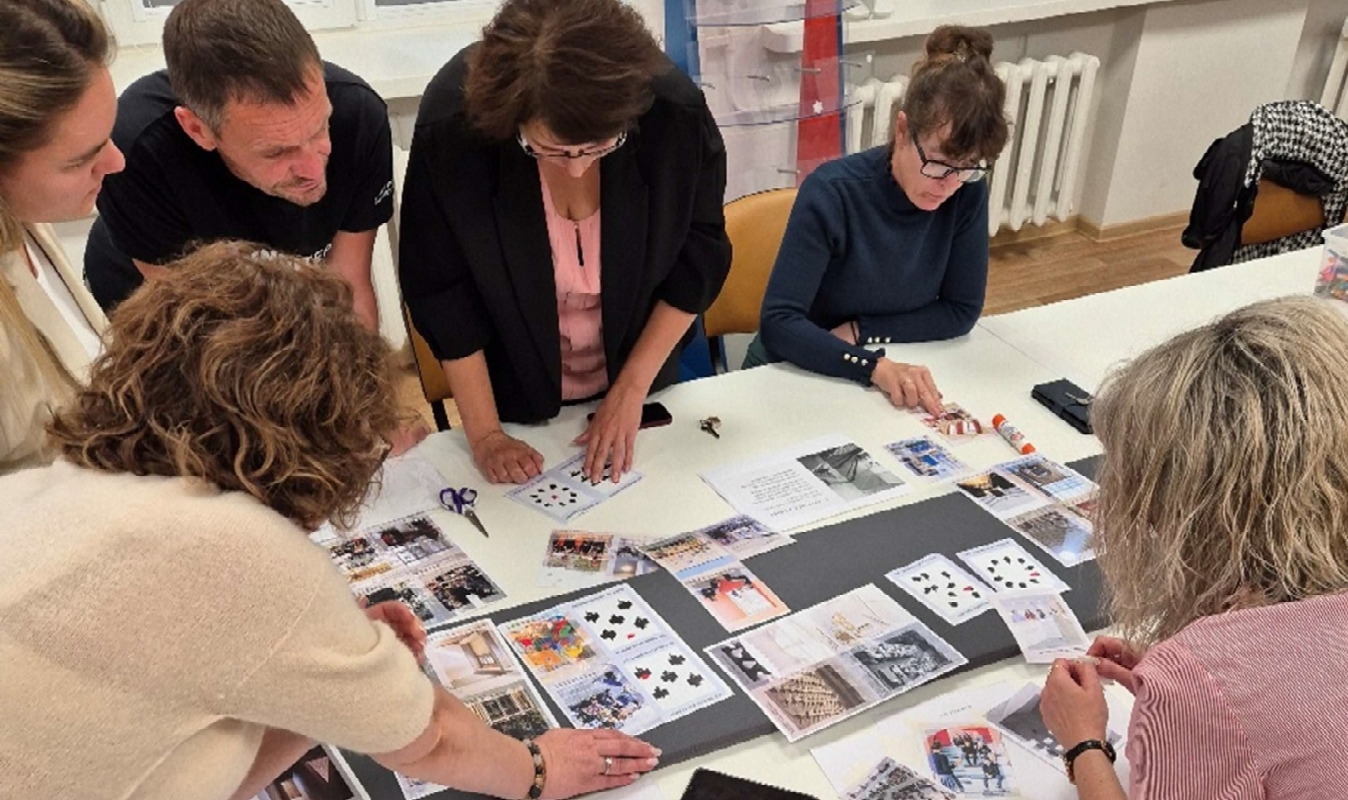
The course was conducted as a 5-day training program based on a methodological model developed by the organisers to effectively combine the educational culture promoted by the school community with academic theory, political goals, and the architectural significance of the building when designing architectural solutions. The methodological model offers opportunities to create a plan for changes based on school sizes, economic resources, and openness to change, while addressing the diverse needs of local communities to implement renovations at their preferred pace and scale. Combined training format including excursions, lectures, discussions, talks, and interviews:
Day 0 – Data collecting session with administration, local community, and school founder
Day 1 – Introductory session (Cultural Value of Modern Heritage; Contemporary Spatial Needs for Education & Good Practice of Renovation of Educational Spaces)
Day 2 – Architectural research with students (excursion held by students, discussions, and workshop with presentations)
Day 3 – Architectural research with teachers and administration (excursion held by administration, interview, workshop, and discussion)
Day 4 – Sociological research (survey of students, parents, and local community)
Day 5 – Final session for discussing the results obtained during the courses
For whom?
- Community of the school: administration, teachers, pupils and their parents.
- Policymakers - Representatives of the municipality and public officials responsible for renovation. (VVK)
- Local community
Provider
Vilnius Tech
Prerequisites
Level 2 EQF – for students and parents
Level 5 EQF – for policy makers and public officials
Topic
Buildings - updating existing buildings and designing/constructing modern sustainable buildings according to NEB values.
Digitalisation - digital skills and the application of digital technologies to optimise individual buildings or the supply and value chains surrounding them.
| Name | Version | Size | Downloads | Modified | ||
|---|---|---|---|---|---|---|

|
Welcome_Session_Presentation.pdf hot | 4.12 MB | 498 | 10 mos ago | Download | |
|
|
Working_Sessions_Presentation.pdf hot | 2.31 MB | 383 | 10 mos ago | Download | |
|
|
Result_Discussion_Sessions_Presentation.pdf hot | 7.28 MB | 394 | 10 mos ago | Download | |
|
|
VILNIUS_TECH_ATNAUJINKIME MOKYKLĄ KARTU_bukletas_LT.pdf hot | 2.94 MB | 407 | 10 mos ago | Download | |
|
|
VILNIUS_TECH_LET’S UPGRADE THE SCHOOL TOGETHER_booklet_ENG.pdf hot | 2.93 MB | 465 | 10 mos ago | Download | |
|
|
VT_Course_01_Final_Report.pdf hot | 8.23 MB | 434 | 10 mos ago | Download |