
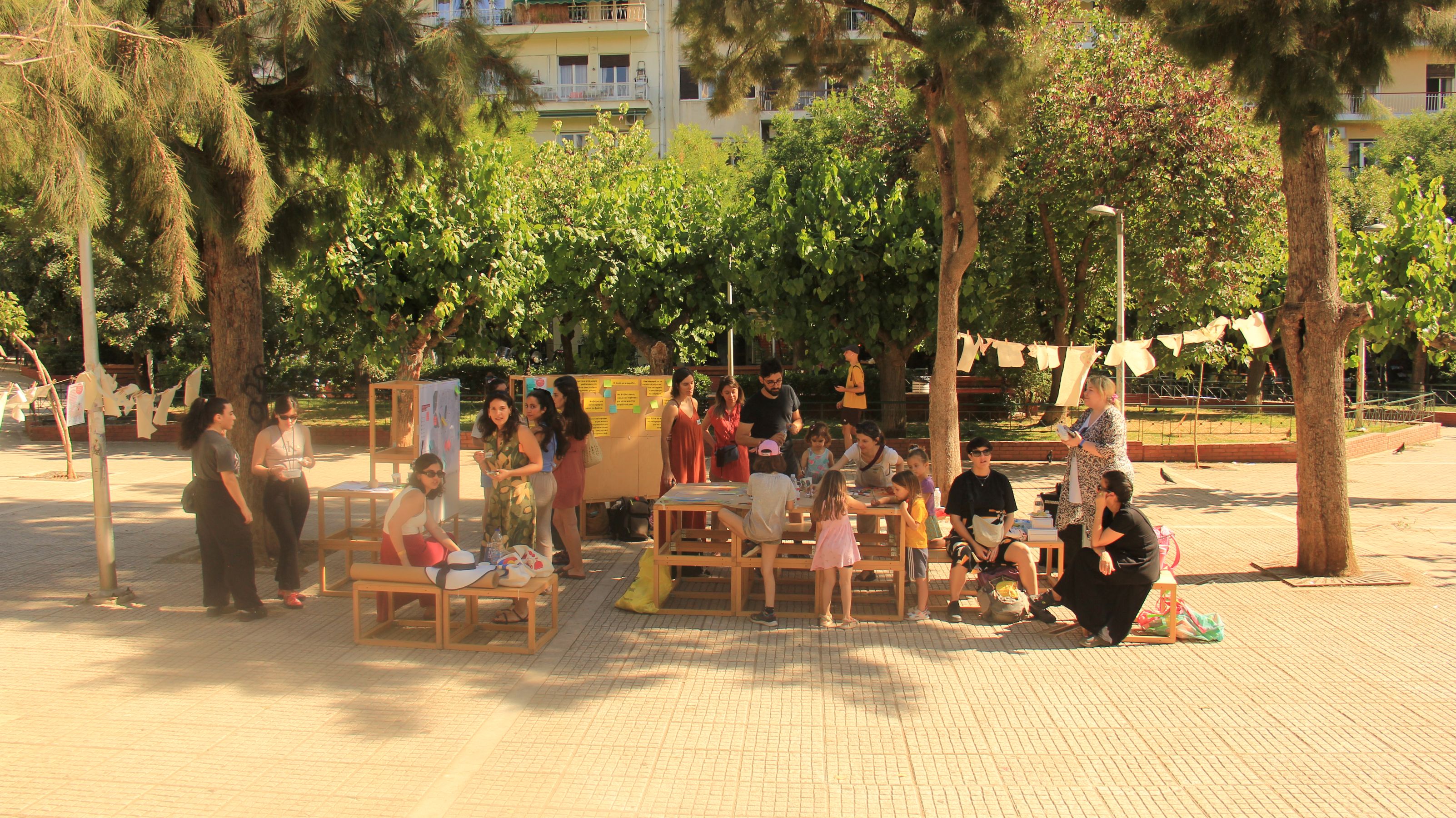
Fostering Inclusive Urban Futures
Session 1: Theoretical Background and Framework
Participants will be introduced to the theoretical background and framework for understanding gender in urban contexts. The session will explore gender as a social construction and examine how it is connected to the use and design of space, highlighting the specific impacts on women and other vulnerable groups. It will also be supported by a case study on the city of Vienna.
Session 01
Session 2: Guidelines for Inclusive City Making and Exercise
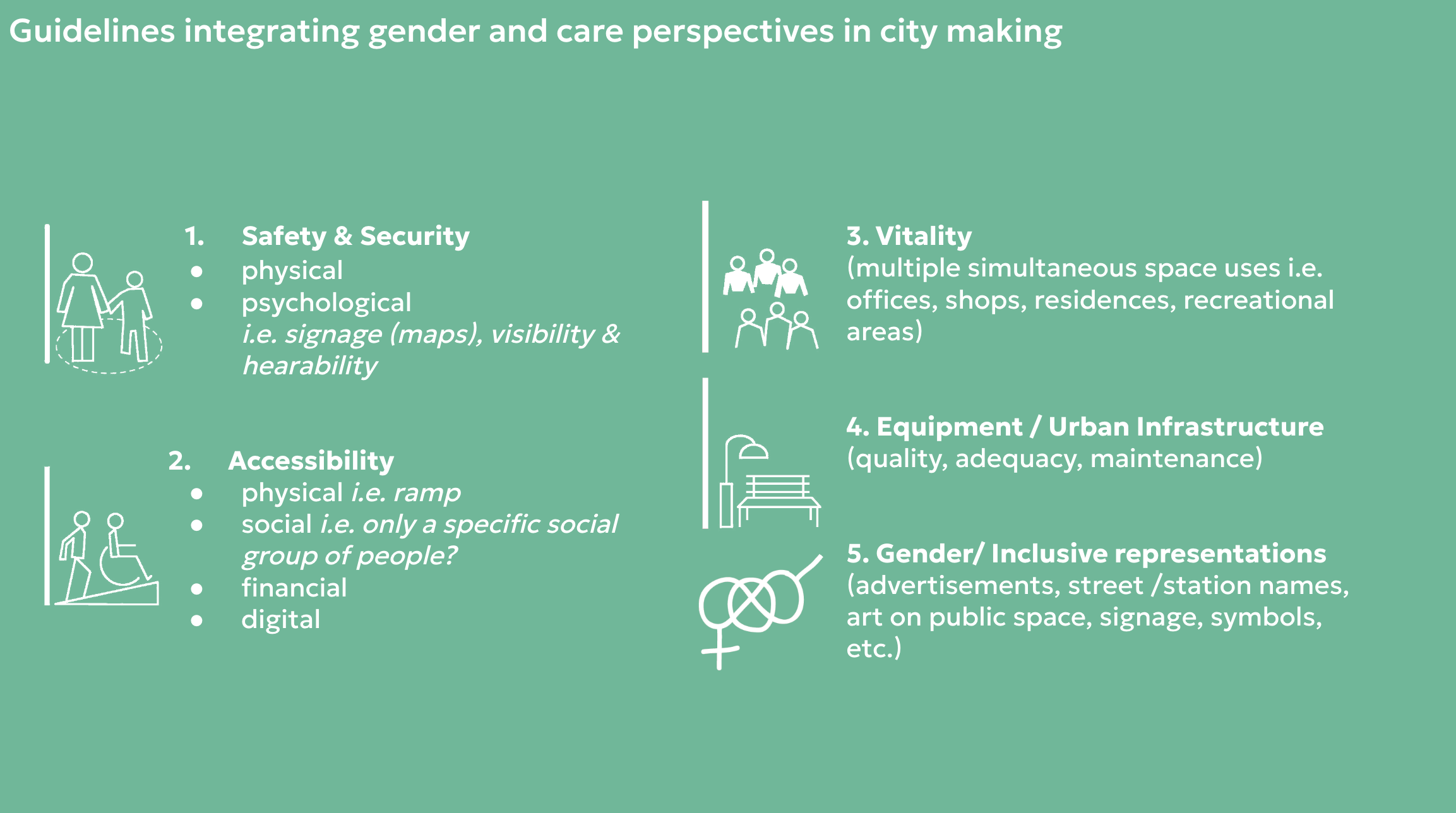
Participants will be introduced to practical guidelines for inclusive city-making. The session will introduce the Femmes et Ville Urban Quality Indicators along with URBANA’s own guidelines, which integrate gender and care perspectives into city making. These guidelines cover key aspects of urban life, including safety and security, accessibility, vitality, and the quality of urban equipment, among others.
Session 02
Collective / Individual exercise
Participants will apply the guidelines to their own urban contexts, developing observations and/or design ideas for an area of interest within their local context. Using the urban quality indicators, they will evaluate their chosen site and begin proposing interventions or improvements that prioritize inclusion and gender and care-sensitive approaches. As outlined in Session 2, this exercise can be carried out on digital platforms such as Miro or Flinga, or alternatively on paper, allowing flexibility based on participants’ preferences and resources.
Session 3: Discussion and Evaluation
The third and final session will focus on sharing the results and key insights
from the exercises. Participants will reflect on their main takeaways, and the
session will conclude with an invitation to complete the evaluation form of the
training through a Google Form, helping to capture feedback and overall
impressions.
Session 3
This course is designed for anyone interested in city making with a focus on gender and care perspectives, aiming to foster more inclusive urban environments. It welcomes a wide audience: from architects, urban planners, and other urban professionals, to students, researchers, or anyone curious about these topics. The course is structured to accommodate different levels of knowledge on inclusivity and gender, requiring no prior expertise. It avoids technical jargon and is delivered in a simple, accessible, and easy-to-understand manner. The training is organised into three recorded sessions, designed to provide participants with the knowledge and practical guidelines. In between Session 2 and 3 is an individual or collective exercise where participants will apply the guidelines to their own urban contexts, developing observations and/or design ideas for an area of interest within their local context.
We suggest using a Miro board to support collaborative reflection during the exercises, enabling participants to capture and share key takeaways interactively. Using a shared Miro board can greatly enhance collaborative reflection during the exercises, allowing participants to capture, view, and interact with each other’s key takeaways. Paper-based alternatives can also be used if preferred.
Learning Objectives
This course aims to equip participants with a solid understanding of gender-sensitive urban planning. Through a mix of theoretical input, interactive and/or individual exercises, participants will explore challenges faced by vulnerable groups, the importance of inclusive and participatory city-making, and the use of urban quality indicators to assess spaces from a more inclusive perspective.
Effort
10 hours
Format
Video lecture content, supporting materials adapted into 3 sessions along with an exercise and reference material.
For whom?
- Urban practitioners and policymakers
- Architects, planners, and designers
- Community organizations and NGOs
- EU institutions and municipal authorities
- Students and youth
- General public
Provider
URBANA
Prerequisites
This course is open to all participants and does not require any prior knowledge or training.
Topic
Design approaches supporting inclusive and gender and care-centered city making.
| Name | Version | Size | Downloads | Modified | ||
|---|---|---|---|---|---|---|

|
Presentation_Session_01 hot | 31.3 MB | 440 | 10 mos ago | Download | |
|
|
Presentation_Session_02 hot | 13 MB | 390 | 10 mos ago | Download | |
|
|
Individual_Collective_Exercise hot | 745.03 KB | 430 | 10 mos ago | Download | |
|
Urban_Quality_Indicators hot | 374.38 KB | 416 | 10 mos ago | Download | |
|
|
Presentation_Session_03 hot | 1.66 MB | 422 | 10 mos ago | Download |