
From Local Waste to Bio-based Innovation
This course offers a practical, studio-based pathway for turning regional residues into high-performance, bio-based materials that advance a beautiful, sustainable, and inclusive built environment.
Enroll
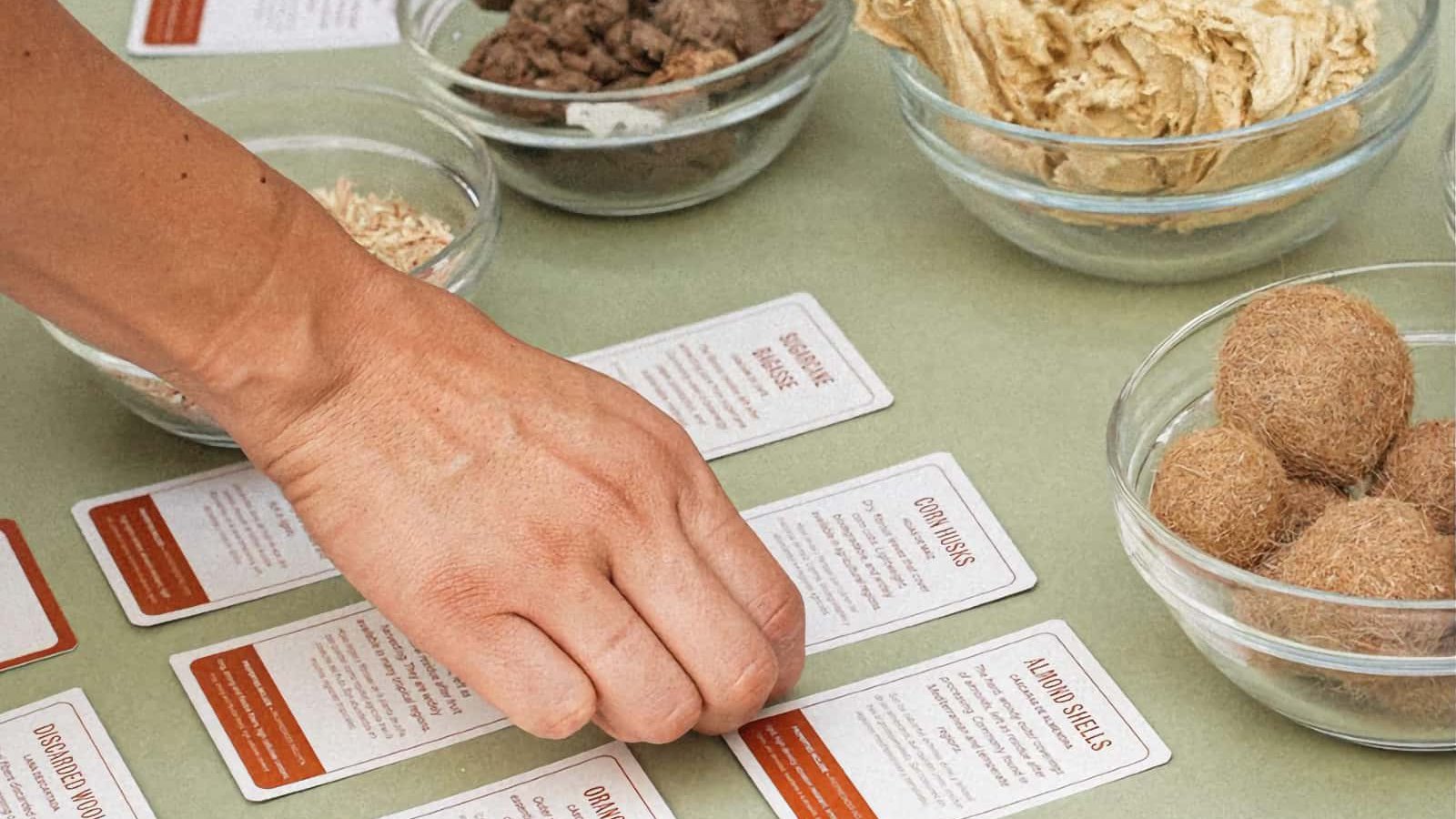
Framed by NEBA’s mission to upskill the construction ecosystem toward carbon neutrality, the course blends concise theory with demonstrations and hands-on exercises, guiding participants from resource mapping to prototyping and evaluation. Learners identify and categorize local waste streams; explore algae-, plant-, and mineral-based binders; and apply traditional, industrial, and digital fabrication methods to create composites rooted in place and circular design. Along the way, they build fluency in reading and interpreting material performance (e.g., durability, thermal and acoustic behavior), practice low-impact processing and safe lab workflows, and map collaboration networks—manufacturers, labs, public agencies, and community partners—that can accelerate responsible scaling. The scope culminates in a personal mini-project with a clear roadmap, including testing priorities, regulatory signposts, and early commercialization steps. By linking creative experimentation with measurable environmental benefits and real-world constraints, the course equips designers, makers, students, and transitioning professionals with the tools, methods, and partnerships needed to move from concept to credible, regionally relevant material innovations aligned with New European Bauhaus values.
Learning Objectives
Our objective is to give you tools and processes that build six key competencies:
- Resource mapping – identifying and categorizing local waste streams for potential use in composites.
- Technical understanding of biopolymers and binders – evaluating and selecting algae-, plant-, and mineral-based adhesive agents.
- Fabrication literacy – applying traditional, industrial, and digital methods of making.
- Performance assessment – knowing which material tests matter, and how to interpret results.
- Strategic collaboration – identifying relevant actors and potential partners in your local ecosystem.
- Roadmapping and commercialization – creating a tailored plan for moving from early research to market-ready products.
Effort
Self-paced Online Format: 8 weeks 30-45 minute sessions per week, Minimum of 2 hours of research and self-paced practice per week. In-person Format: 8 sessions 2-3 hours per session with in-class working time. Minimum of 1 hour of research and self-paced practice per week.
Format
Self-paced Online Format Or In-person Format
For whom?
- Designers, architects, and makers working in interiors, materials, or product development.
- Material researchers, educators, and sustainability professionals seeking to learn about applied bio-based innovation.
- Students in design, architecture, environmental studies, or circular economy programs.
- Fab Lab users and innovation hub participants interested in regenerative materials and local fabrication.
- Professionals in transition — shifting from conventional to bio-based product development or green entrepreneurship.
Provider
Bagaceira Material Design Studio (Julia Steketee, co-founder)
Prerequisites
Prior knowledge of design, architecture, fabrication, or material science is recommended but not required.
Hub
NEBA South Hub
Topic
Circular, Bio-based, Material Development for Interior Design or Interior Architecture